
Introduction
Cyber security is no longer optional it’s essential. With rising cyber threats, data breaches, and digital transformation, organizations worldwide are investing heavily in security professionals.
If you’re planning to build or grow your career in cyber security, certifications are one of the fastest ways to validate your skills, increase credibility, and boost salary potential.
In this complete guide to the top cyber security certifications in 2026, you’ll discover:
- The most in-demand certifications
- Which certification is right for your career level
- Salary expectations and career paths
- How to choose the best certification for you
Why Cyber Security Certifications Matter in 2026
Cyber security certifications help you:
- Validate real-world skills
- Stand out in a competitive job market
- Increase earning potential
- Gain industry recognition
Companies today prefer certified professionals because certifications prove you understand:
- Security frameworks
- Risk management
- Real-world attack scenarios
How to Choose the Right Cyber Security Certification
Before jumping into certifications, consider:
Your Career Level
- Beginner → Start with foundational certifications
- Intermediate → Go for role-based certifications
- Advanced → Choose specialized certifications
Your Career Goal
- Ethical hacking
- Network security
- Cloud security
- Security management
Industry Demand
Focus on certifications recognized globally and valued by employers.
Top Cyber Security Certifications in 2026
1. Certified Ethical Hacker (CEH)
Overview
This certification focuses on ethical hacking and penetration testing, teaching you how hackers think and how to defend systems.
Key Skills Covered
- Network scanning
- Vulnerability analysis
- System hacking
- Social engineering
Best For
- Beginners to intermediate learners
- Aspiring ethical hackers
Average Salary
High demand with strong salary growth potential
2. CompTIA Security+
Overview
One of the best entry-level cyber security certifications, covering core security concepts.
Key Skills Covered
- Threat management
- Cryptography
- Network security
- Risk management
Best For
- Beginners
- IT professionals switching to cyber security
Why It’s Popular
Globally recognized and vendor-neutral
3. Certified Information Systems Security Professional (CISSP)
Overview
A gold-standard certification for experienced professionals focusing on security architecture and management.
Key Skills Covered
- Security operations
- Asset security
- Security architecture
- Risk management
Best For
- Experienced professionals (5+ years)
Career Roles
- Security Analyst
- Security Manager
- Security Architect
4. Certified Information Security Manager (CISM)
Overview
Focused on management and governance, ideal for leadership roles.
Key Skills Covered
- Risk management
- Governance
- Incident management
Best For
- IT managers
- Security leaders
5. Certified Information Systems Auditor (CISA)
Overview
Designed for professionals working in IT auditing and compliance.
Key Skills Covered
- Information systems auditing
- Compliance
- Risk assessment
Best For
- Auditors
- Compliance professionals
6. Offensive Security Certified Professional (OSCP)
Overview
One of the most respected certifications in penetration testing.
Key Skills Covered
- Exploitation techniques
- Penetration testing
- Real-world hacking scenarios
Best For
- Advanced learners
- Ethical hackers
Why It’s Valuable
Highly practical and hands-on
7. Cloud Security Certifications (High Demand)
With cloud adoption growing, certifications from Amazon Web Services, Microsoft, and Google are in huge demand.
Popular Options
- AWS Security Specialty
- Azure Security Engineer
- Google Professional Cloud Security Engineer
8. GIAC Security Essentials (GSEC)
Overview
A strong certification for hands-on security skills.
Key Skills Covered
- Access control
- Cryptography
- Incident handling
Best For
- Intermediate professionals
Certification Comparison Table
| Certification | Level | Focus Area | Best For |
|---|---|---|---|
| CEH | Beginner–Intermediate | Ethical Hacking | Hackers |
| Security+ | Beginner | Fundamentals | Starters |
| CISSP | Advanced | Security Architecture | Experts |
| CISM | Advanced | Management | Leaders |
| CISA | Intermediate | Auditing | Auditors |
| OSCP | Advanced | Pen Testing | Hackers |
Cyber Security Salary Insights (2026)
Certified professionals earn significantly more than non-certified ones.
Popular Roles & Salary Trends
- Security Analyst → High demand
- Ethical Hacker → Premium salaries
- Cloud Security Engineer → Rapid growth
- Security Architect → Top-tier salaries
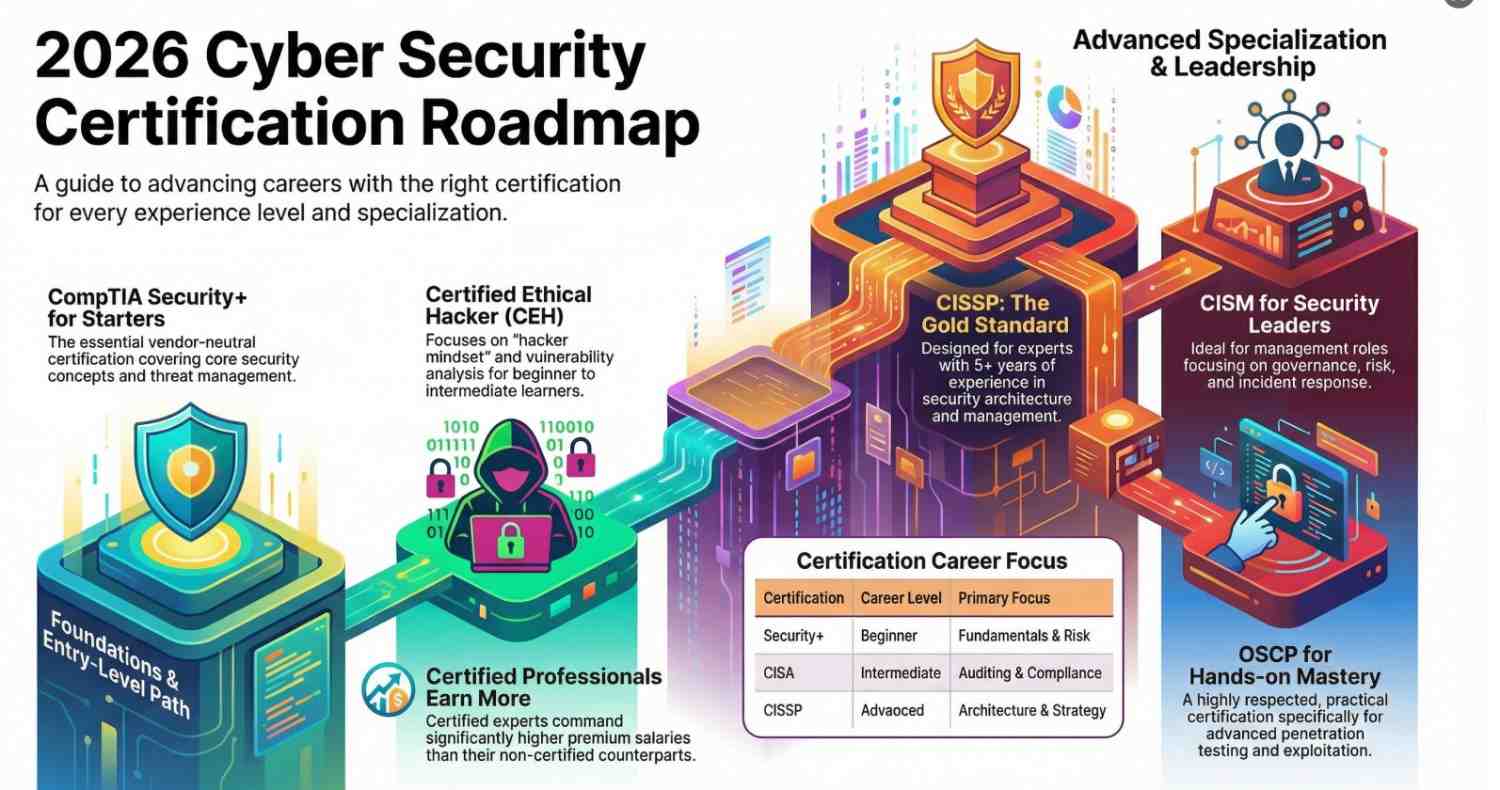
Certification Roadmap (Beginner to Expert)
Step 1: Start with Basics
- CompTIA Security+
Step 2: Choose Your Path
- Ethical Hacking → CEH → OSCP
- Management → CISM → CISSP
- Auditing → CISA
Step 3: Specialize
- Cloud security
- Penetration testing
- Governance
Tips to Pass Cyber Security Certification Exams
- Focus on real-world scenarios
- Practice with mock exams
- Use hands-on labs
- Study consistently (1–2 hours daily)
- Join online communities
Common Mistakes to Avoid
- Skipping fundamentals
- Choosing the wrong certification
- Ignoring practical skills
- Not practicing enough
Future of Cyber Security Certifications
In 2026 and beyond, trends include:
- AI-powered security
- Zero Trust architecture
- Cloud-native security
- Automation in cyber defense
Certifications aligned with these trends will have higher value and demand.
Conclusion
Cyber security certifications are one of the best investments you can make in your career.
Whether you’re just starting or aiming for leadership roles, the right certification can:
- Open new job opportunities
- Increase your salary
- Build credibility
Start small, stay consistent, and keep upgrading your skills.
- If you want to explore Cyber Security, start your training here.