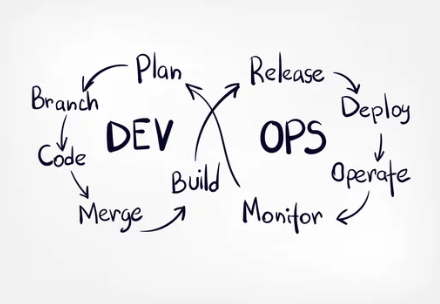
In today’s technology landscape, businesses are no longer competing only on products or pricing. They are competing on speed, reliability, scalability, and innovation. Behind every high-performing digital platform is a strong engineering culture powered by an efficient DevOps team.
At Astrakia, building a successful DevOps organization was never just about implementing tools or automating deployments. It was about creating a culture where engineers could move fast without compromising stability, security, or customer experience.
The journey was not always smooth. Like many growing technology companies, Astrakia faced challenges with scaling infrastructure, improving deployment velocity, reducing downtime, and aligning engineering efforts with business goals. But through continuous learning and strong leadership principles, the company transformed its operations into a modern, agile, and resilient DevOps ecosystem.
This article explores the key leadership lessons learned while building Astrakia’s DevOps team and how these lessons helped create a high-performance engineering culture.
Table of Contents
Toggle1. Culture Comes Before Tools
One of the biggest misconceptions about DevOps is that it is purely a technical practice. Many organizations focus heavily on tools such as Kubernetes, Jenkins, Terraform, or Docker while ignoring the cultural shift required for DevOps success.
At Astrakia, leadership quickly realized that tools alone could not solve collaboration problems.
Early in the company’s growth phase, development and operations teams worked in silos. Developers focused on releasing features quickly, while operations teams prioritized stability and uptime. This created friction, delayed deployments, and increased operational risks.
The turning point came when leadership emphasized shared ownership.
Instead of assigning blame during incidents, teams began working together to identify root causes and improve systems collectively. Engineers were encouraged to take responsibility for the full lifecycle of applications from development to deployment and monitoring.
This cultural transformation improved communication, reduced deployment bottlenecks, and increased trust between teams.
The lesson was simple:
DevOps succeeds when people collaborate, not when tools are installed.
2. Hire for Mindset, Not Just Technical Skills
Building a high-performance DevOps team requires more than technical expertise.
Astrakia learned that the best DevOps engineers are not necessarily the ones with the longest list of certifications or the deepest knowledge of a single platform. The most valuable team members were those who embraced learning, adaptability, problem-solving, and ownership.
Technology changes rapidly. A tool that is popular today may become obsolete tomorrow. Leadership understood that hiring engineers with a growth mindset would create a more future-ready organization.
During hiring interviews, Astrakia focused on questions such as:
- How do candidates approach problem-solving?
- Can they collaborate across teams?
- How do they respond during production incidents?
- Are they comfortable learning new technologies?
- Can they communicate complex technical ideas clearly?
This hiring philosophy helped build a team capable of evolving with changing business and technology demands.
The result was a stronger engineering culture built around curiosity, accountability, and continuous improvement.
3. Automation Is About Empowerment
Automation is often viewed as a way to reduce manual work. While that is true, Astrakia discovered that automation also empowers engineering teams to focus on innovation rather than repetitive tasks.
In the early days, deployments required multiple manual approvals and operational steps. Infrastructure provisioning was slow, and configuration inconsistencies caused avoidable production issues.
Leadership prioritized automation as a strategic initiative.
The DevOps team implemented:
- Automated CI/CD pipelines
- Infrastructure as Code (IaC)
- Automated testing workflows
- Monitoring and alerting systems
- Self-service deployment processes
These improvements significantly reduced deployment times and operational errors.
More importantly, engineers gained confidence in the deployment process. Teams could release updates faster without fear of breaking production systems.
Automation was no longer just an operational improvement it became a competitive advantage.
The leadership takeaway was clear:
Great automation enables engineers to spend more time creating value and less time managing complexity.
4. Reliability Builds Customer Trust
As Astrakia scaled, customer expectations increased. Downtime, slow performance, and failed deployments directly impacted user experience and business credibility.
Leadership recognized that reliability was not only a technical objective but also a business priority.
To improve system reliability, the DevOps organization adopted several key practices:
- Proactive monitoring and observability
- Incident response playbooks
- Site Reliability Engineering (SRE) principles
- Post-incident reviews
- Redundancy and failover planning
One major shift involved changing how incidents were handled.
Previously, production issues often triggered panic and blame. Over time, leadership introduced a blameless incident culture where the focus shifted toward learning and prevention rather than punishment.
This approach encouraged transparency and faster problem resolution.
Engineers became more comfortable reporting risks, discussing failures openly, and contributing to system improvements.
The lesson learned was powerful:
Reliable systems are built by psychologically safe teams.
5. Speed and Security Must Work Together
Many organizations struggle to balance fast delivery with strong security practices. Traditionally, security reviews slow down releases and create friction between teams.
Astrakia approached this challenge differently.
Leadership integrated security directly into the DevOps lifecycle rather than treating it as a separate process. This shift introduced DevSecOps practices across the engineering organization.
Security became part of:
- CI/CD pipelines
- Infrastructure provisioning
- Code reviews
- Vulnerability scanning
- Compliance automation
Developers received security training, and security teams collaborated closely with engineers during development rather than only before production releases.
This approach reduced deployment delays while strengthening overall system security.
The company learned that security works best when it becomes a shared engineering responsibility instead of a final checkpoint.
6. Metrics Should Drive Improvement, Not Pressure
Modern engineering organizations rely heavily on metrics. However, poorly managed metrics can create unhealthy pressure and encourage the wrong behaviors.
Astrakia’s leadership focused on using metrics for learning and optimization rather than surveillance.
The DevOps team tracked indicators such as:
- Deployment frequency
- Mean Time to Recovery (MTTR)
- Change failure rate
- Infrastructure costs
- System uptime
- Lead time for changes
Instead of using these metrics to evaluate individual performance, leadership used them to identify bottlenecks and improve engineering processes.
This created a healthier culture where teams felt motivated to improve systems collaboratively.
Metrics became tools for visibility and decision-making rather than fear-driven reporting.
The leadership insight was important:
Data should guide engineering excellence, not create engineering anxiety.
7. Continuous Learning Is Non-Negotiable
Technology evolves constantly, and DevOps practices continue to change rapidly.
Astrakia understood early that a static engineering team would eventually fall behind. Leadership invested heavily in continuous learning and skill development.
Engineers were encouraged to:
- Attend technical workshops
- Earn cloud certifications
- Experiment with new technologies
- Participate in internal knowledge-sharing sessions
- Contribute to open-source projects
- Learn from failures and incidents
The company also created dedicated time for innovation and experimentation.
This investment produced long-term benefits. Engineers became more confident, adaptable, and capable of solving complex infrastructure challenges.
More importantly, the culture of learning increased employee engagement and retention.
The company learned that:
Organizations that learn faster build better systems faster.
8. Leadership Must Remove Bottlenecks
One of the most valuable lessons from building Astrakia’s DevOps team was understanding the true role of leadership.
Strong engineering leadership is not about controlling every decision. It is about enabling teams to succeed.
At Astrakia, leadership focused on removing organizational and operational bottlenecks that slowed engineers down.
This included:
- Simplifying approval processes
- Reducing unnecessary meetings
- Improving internal documentation
- Investing in better developer tools
- Clarifying team ownership
- Encouraging autonomous decision-making
Leaders acted as facilitators rather than gatekeepers.
As a result, teams became faster, more independent, and more accountable.
The organization shifted from a command-and-control structure to a culture built on trust and empowerment.
9. DevOps Is a Business Strategy
Perhaps the most important realization during Astrakia’s journey was that DevOps is not merely an IT function.
It is a business strategy.
Efficient DevOps practices directly impact:
- Product delivery speed
- Customer satisfaction
- Revenue growth
- Operational efficiency
- Innovation capacity
- Market competitiveness
Leadership aligned DevOps goals with broader business objectives. Engineering teams understood how their work contributed to company growth and customer success.
This alignment increased motivation and created a stronger sense of purpose across teams.
When DevOps becomes part of business strategy, organizations move faster, innovate more effectively, and respond better to market demands.
Conclusion
Building Astrakia’s DevOps team was not only a technical transformation it was a leadership transformation.
The company learned that successful DevOps organizations are built on trust, collaboration, automation, accountability, and continuous learning. Leadership played a critical role in shaping the culture, removing obstacles, and empowering engineers to perform at their best.
Today, Astrakia’s DevOps journey continues to evolve as technology advances and business needs grow. But the core lessons remain the same:
- Culture matters more than tools.
- Great teams are built through trust and ownership.
- Automation enables innovation.
- Reliability and security are shared responsibilities.
- Continuous learning drives long-term success.
- Leadership exists to empower teams, not control them.
For organizations looking to build modern engineering teams, these lessons offer a roadmap toward creating resilient, scalable, and high-performing DevOps cultures capable of thriving in a rapidly changing digital world.
- Want to scale faster with DevOps? Learn more here.