
Cloud computing has moved from a “nice-to-have” skill to a career necessity, and AWS certifications have become one of the most trusted ways to validate cloud expertise. Whether you’re a student, career switcher, or experienced IT professional, understanding all AWS certifications and how they are structured is critical before investing your time and money.
This in-depth guide explains AWS certification levels from Foundational to Specialty, answers common questions like how many AWS certifications are there and are AWS certifications worth it, and helps you choose the right path based on your career goals.
Why AWS Certifications Matter in Today’s Job Market
Amazon Web Services (AWS) is the world’s leading cloud platform, powering startups, enterprises, and governments alike. As organizations migrate to the cloud, they need professionals who can design, deploy, secure, and operate AWS infrastructure.
AWS certifications help by:
- Validating real-world cloud knowledge
- Providing structured learning paths
- Improving job visibility and credibility
- Supporting career growth and salary potential
But not all certifications are equal and not everyone should start at the same level.
How Many AWS Certifications Are There?
One of the most common questions beginners ask is:
“How many AWS certifications are there?”
As of now, AWS offers multiple certifications across four levels:
- Foundational
- Associate
- Professional
- Specialty
Together, these make up all AWS certifications, designed to match different experience levels and job roles.
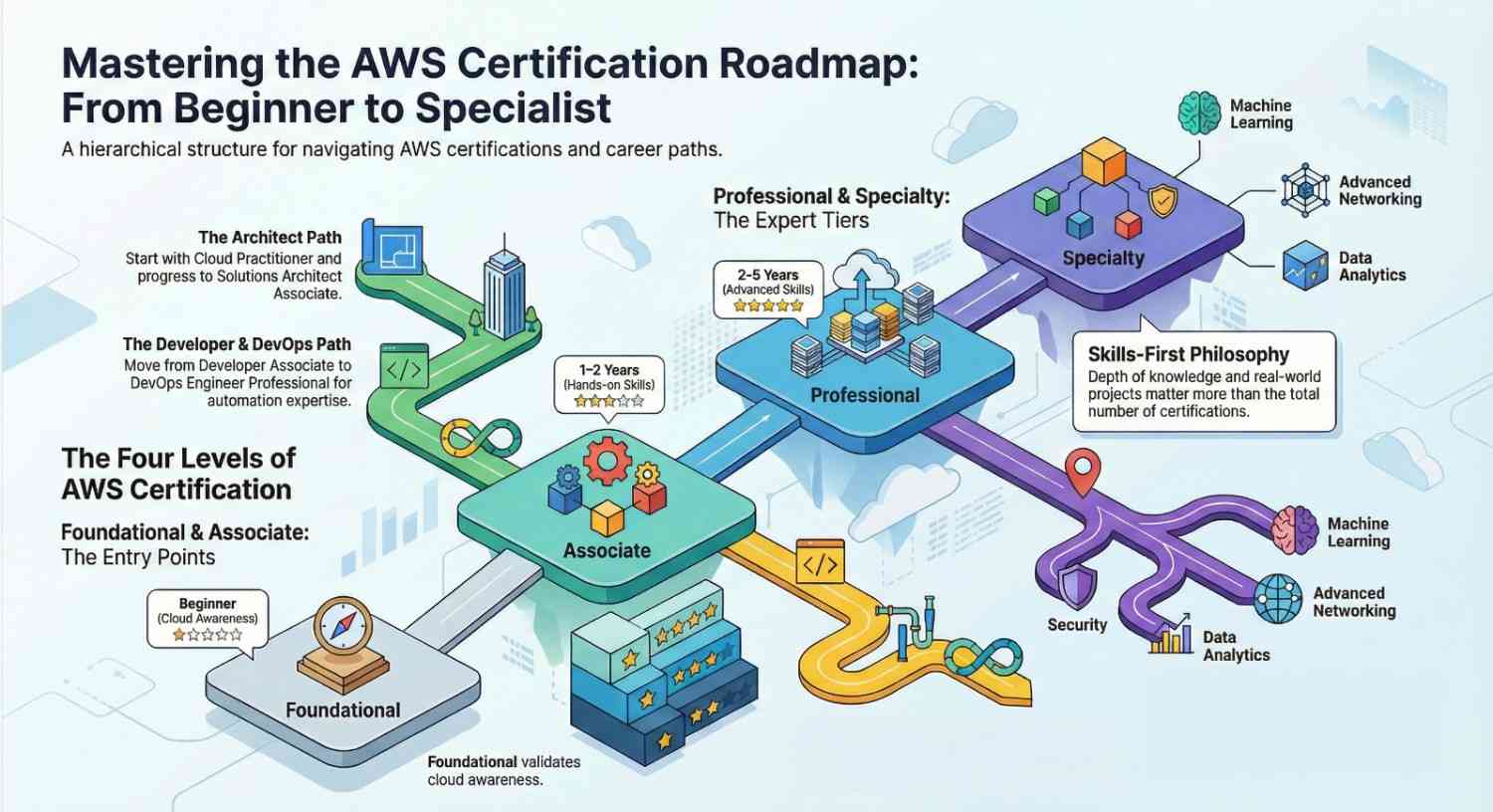
Overview of AWS Certification Levels
AWS certifications are not random exams they are intentionally structured to move from broad knowledge to deep specialization.
| Level | Purpose | Experience Required |
|---|---|---|
| Foundational | Cloud awareness | Beginner |
| Associate | Hands-on skills | 1–2 years |
| Professional | Advanced architecture & automation | 2–5 years |
| Specialty | Deep domain expertise | Specialized experience |
Let’s break down each level in detail.
Foundational Level: Starting Your AWS Journey
AWS Certified Cloud Practitioner
The Foundational level consists of a single certification: AWS Certified Cloud Practitioner.
Who Should Take It?
- Beginners with no cloud experience
- Non-technical roles (sales, management, finance)
- Students and career switchers
- Anyone wanting a high-level AWS overview
What It Covers
- Cloud computing concepts
- Core AWS services (EC2, S3, RDS, Lambda)
- AWS security and compliance basics
- Pricing models, billing, and support plans
Difficulty Level
⭐☆☆☆☆ (Beginner-friendly)
Is It Mandatory?
No especially for technical roles. Many engineers skip this and go directly to the Associate level. However, it provides a low-risk entry point into AWS.
This certification focuses on understanding AWS, not building on AWS.
Associate Level: The Core of AWS Certifications
The Associate level is where most people begin serious cloud training. These certifications validate hands-on AWS skills and are highly valued by employers.
AWS Certified Solutions Architect – Associate
Best for:
- Cloud engineers
- Architects
- IT professionals
- Career switchers
Key Focus Areas
- Designing scalable architectures
- High availability and fault tolerance
- Security best practices
- Cost optimization
Difficulty
⭐⭐⭐☆☆
This is the most popular AWS certification and often considered the best starting point for technical roles.
AWS Certified Developer – Associate
Best for:
- Software developers
- Application engineers
Key Focus Areas
- AWS SDKs and APIs
- Serverless services (Lambda, API Gateway)
- CI/CD pipelines
- DynamoDB and application integration
Difficulty
⭐⭐⭐☆☆
This certification focuses on building and deploying applications on AWS rather than infrastructure design.
AWS Certified SysOps Administrator – Associate
Best for:
- System administrators
- Operations and support engineers
- DevOps beginners
Key Focus Areas
- Monitoring and logging
- Automation and configuration management
- Troubleshooting and reliability
- Security operations
Difficulty
⭐⭐⭐⭐☆
This is often considered the hardest Associate-level exam due to its operational depth.
Professional Level: Advanced AWS Expertise
Professional-level certifications are designed for experienced cloud professionals. These exams are scenario-heavy, time-consuming, and mentally demanding.
AWS Certified Solutions Architect – Professional
Who It’s For
- Senior cloud architects
- Consultants and technical leads
What It Covers
- Large-scale, multi-account architectures
- Hybrid and multi-region systems
- Migration strategies
- Cost optimization at scale
Difficulty
⭐⭐⭐⭐⭐
This exam tests decision-making, not memorization.
AWS Certified DevOps Engineer – Professional
Who It’s For
- DevOps engineers
- Site Reliability Engineers (SREs)
What It Covers
- CI/CD automation
- Infrastructure as Code (CloudFormation, Terraform concepts)
- Monitoring and incident response
- Security and compliance automation
Difficulty
⭐⭐⭐⭐⭐
⚠️ Attempt this only with real-world AWS experience.
Specialty Level: Deep Domain Expertise
Specialty certifications validate expert-level knowledge in a specific AWS domain. They are not beginner-friendly and assume strong AWS fundamentals.
AWS Specialty Certifications Include:
- Security
- Advanced Networking
- Data Analytics
- Machine Learning
- Database
Who Should Take Specialty Certifications?
- Professionals specializing in one domain
- Engineers working in security, data, ML, or networking
- Candidates aiming for niche, high-paying roles
Difficulty Level
⭐⭐⭐⭐☆ to ⭐⭐⭐⭐⭐
You can take a Specialty certification without a Professional one experience matters more than sequence.
Are AWS Certifications Worth It?
Another big question people ask is:
“Are AWS certifications worth it?”
The Short Answer:
Yes when combined with hands-on experience.
AWS Certifications Are Worth It If:
- You are breaking into cloud computing
- You need structured learning
- You want resume credibility
- You are changing careers
- Your role already uses AWS
AWS Certifications Are NOT Enough If:
- You rely only on exam dumps
- You avoid real projects
- You don’t practice hands-on labs
Employers value skills first, certifications second but certifications often get you past resume filters.
How to Choose the Right AWS Certification Path
Beginner Path
Cloud Practitioner → Solutions Architect Associate
Developer Path
Developer Associate → DevOps Engineer Professional
DevOps / Operations Path
SysOps Associate → DevOps Engineer Professional
Security Path
Solutions Architect Associate → Security Specialty
Data & ML Path
Solutions Architect Associate → Data Analytics or Machine Learning Specialty
How Many AWS Certifications Should You Get?
There is no “perfect number.”
Most professionals succeed with:
- 1–2 Associate certifications
- Optional Professional or Specialty
More certifications ≠ better jobs. Depth matters more than volume.
Final Thoughts: Building a Smart AWS Certification Strategy
AWS certifications are tools not guarantees. Understanding all AWS certifications, choosing the right level, and aligning them with hands-on practice is what truly drives career growth.
If you’re strategic:
- Start at the right level
- Build real projects
- Specialize when ready
AWS certifications can absolutely be worth it.
Explore AWS basics here, then master it with Jeevi’s resources and our complete AWS training.