
Introduction
Cloud computing is no longer optional it’s the backbone of modern IT infrastructure. From startups to Fortune 500 companies, organizations rely on cloud platforms to build scalable, secure, and cost-efficient systems.
If you’re searching for a cloud computing roadmap in 2026, this step-by-step guide will help you move from beginner to job-ready cloud professional.
Whether you’re a student, career switcher, or IT professional, this roadmap will clarify:
- What to learn first
- Which tools to focus on
- The best cloud certification path
- How to become a cloud engineer in 6–12 months
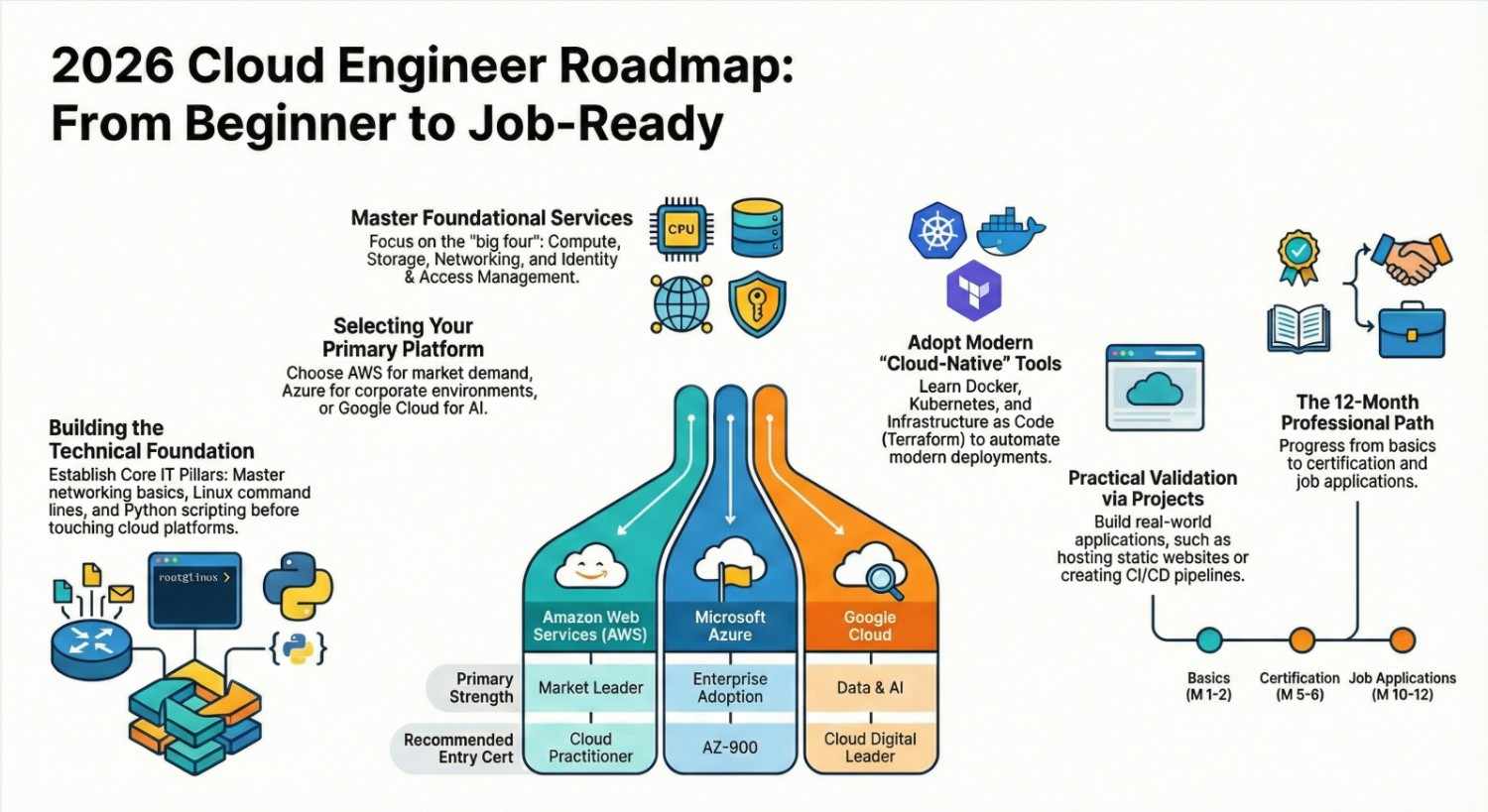
Step 1: Understand the Fundamentals of Cloud Computing
Before diving into platforms like Amazon Web Services, Microsoft Azure, or Google Cloud, you must understand the basics.
Learn These Core Concepts:
- What is cloud computing?
- IaaS vs PaaS vs SaaS
- Public vs Private vs Hybrid cloud
- Virtual machines
- Cloud regions & availability zones
- Scalability and elasticity
Beginner Tip (2026): Focus on understanding why companies move to the cloud cost savings, automation, global reach, and security.
Step 2: Build Strong IT Foundations
A solid cloud engineer roadmap starts with core IT skills.
1. Networking Basics
Learn:
- IP addresses
- DNS
- Subnets
- Firewalls
- TCP/IP
- Load balancing
Cloud platforms heavily rely on networking.
2. Linux Fundamentals
Most cloud servers run Linux. Learn:
- Command line basics
- File permissions
- Package management
- SSH
3. Basic Programming
You don’t need to be a software developer, but scripting helps.
Recommended:
- Python
- Bash scripting
Step 3: Choose Your Cloud Platform (AWS vs Azure vs Google Cloud)
One of the most common beginner questions:
Which cloud platform should I learn in 2026?
Here’s a quick comparison:
Amazon Web Services (AWS)
- Market leader
- Massive job demand
- Beginner-friendly certifications
Microsoft Azure
- Strong enterprise adoption
- Great for Windows environments
- Popular in corporate IT roles
Google Cloud
- Strong in data & AI
- Clean interface
- Growing demand
Beginner Recommendation: Start with AWS due to market demand, then explore Azure or Google Cloud later.
Step 4: Learn Core Cloud Services
No matter which platform you choose, focus on these foundational services:
1. Compute
- EC2 (virtual machines)
- App services
2. Storage
- Object storage (S3 equivalent)
- Block storage
- Backup solutions
3. Networking
4. Identity & Access Management (IAM)
Security is critical in cloud computing for beginners.
Step 5: Learn Containers & Modern Cloud Tools
In 2026, cloud computing isn’t just about virtual machines.
Must-Learn Tools:
- Docker
- Kubernetes
- CI/CD basics
- Git & GitHub
Containers are essential for DevOps and cloud-native applications.
Step 6: Infrastructure as Code (IaC)
Modern cloud engineers don’t manually configure servers.
Learn:
Infrastructure as Code helps automate cloud deployments and is highly demanded in 2026.
Step 7: Follow a Cloud Certification Path
Certifications boost credibility, especially for beginners.
Recommended Cloud Certification Path (AWS Example)
- Cloud Practitioner
- Solutions Architect Associate
- SysOps or Developer Associate
For Azure:
- AZ-900
- AZ-104
For Google Cloud:
- Cloud Digital Leader
- Associate Cloud Engineer
Certifications help you land interviews but skills land jobs.
Step 8: Build Real Projects (Very Important)
A cloud computing roadmap is incomplete without projects.
Beginner Projects:
- Host a static website on cloud
- Deploy a Linux VM
- Configure load balancing
- Create a CI/CD pipeline
- Deploy a containerized app
Recruiters love hands-on experience.
Step 9: Learn Cloud Security Basics
Cloud security is a high-paying specialization.
Understand:
- IAM policies
- Encryption basics
- Cloud monitoring
- Logging
- Compliance fundamentals
Security knowledge separates average learners from professionals.
Step 10: Apply for Cloud Roles
Entry-level roles:
- Cloud Support Associate
- Junior Cloud Engineer
- DevOps Intern
- System Administrator (Cloud)
Update your resume with:
- Certifications
- Projects
- GitHub links
- Hands-on labs
6–12 Month Cloud Engineer Roadmap Timeline
Months 1–2:
Networking + Linux + Cloud basics
Months 3–4:
Learn AWS/Azure fundamentals
Months 5–6:
Certification + Projects
Months 7–9:
Containers + IaC
Months 10–12:
Advanced services + Job applications
Future of Cloud Computing in 2026
Cloud computing continues to grow due to:
- AI integration
- Edge computing
- Multi-cloud strategies
- Automation & DevOps
Professionals who combine cloud + AI + automation will dominate the job market.
Final Thoughts
This cloud computing roadmap (2026 edition) provides a structured path from beginner to cloud professional.
Remember:
- Focus on fundamentals
- Practice daily
- Build projects
- Get certified
- Stay consistent
Cloud computing is not hard it just requires structured learning and hands-on experience.
- If you want to explore Cloud Computing, start your training here.