
Introduction
Cloud computing offers flexibility, scalability, and speed but without proper control, costs can spiral quickly.
This Cloud Cost Optimization Cheat Sheet is a practical guide to help you:
- Reduce cloud waste
- Optimize infrastructure costs
- Improve efficiency without sacrificing performance
Whether you’re using AWS, Azure, or GCP, these principles apply universally.
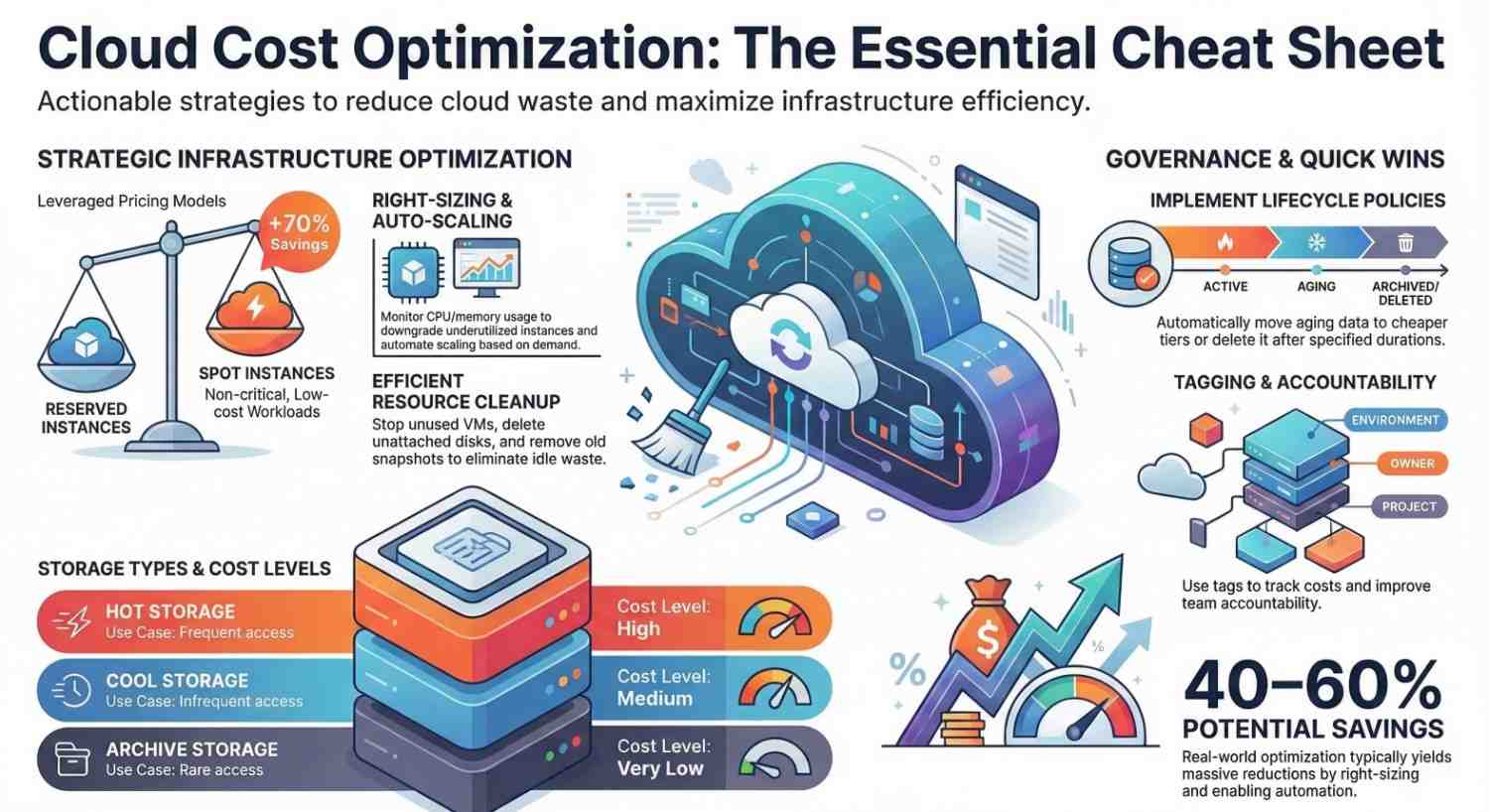
What is Cloud Cost Optimization?
Cloud cost optimization is the process of:
Reducing unnecessary cloud spending while maximizing performance and efficiency
Key Goals
- Eliminate unused resources
- Right-size infrastructure
- Improve utilization
- Automate cost control
Cloud Pricing Basics
Understanding pricing is the first step.
Common Cost Drivers
- Compute (VMs, containers)
- Storage (object, block)
- Data transfer (egress costs)
- Managed services (databases, APIs)
Pricing Models
🔹 Pay-As-You-Go
- Pay only for usage
- Flexible but can be unpredictable
🔹 Reserved Instances / Savings Plans
- Commit for 1–3 years
- Up to 70% cheaper
🔹 Spot Instances
- Cheapest option
- Can be interrupted
Compute Optimization Cheat Sheet
Right-Sizing Instances
Avoid over-provisioning
Best Practices
- Monitor CPU & memory usage
- Downgrade underutilized instances
- Use auto-scaling
Idle Resource Cleanup
- Stop unused VMs
- Delete unattached disks
- Remove old snapshots
Use Auto Scaling
Automatically:
- Scale up during high traffic
- Scale down during low usage
Saves cost + improves performance
Use Spot Instances Wisely
Best for:
- Batch jobs
- CI/CD workloads
- Non-critical applications
Storage Optimization Cheat Sheet
Choose the Right Storage Class
| Storage Type | Use Case | Cost |
|---|---|---|
| Hot Storage | Frequent access | High |
| Cool Storage | Infrequent access | Medium |
| Archive Storage | Rare access | Very Low |
Storage Cleanup
- Delete unused files
- Remove duplicate backups
- Set lifecycle policies
Lifecycle Policies Example
- Move old data → cheaper storage
- Delete after X days
Network Cost Optimization
Reduce Data Transfer Costs
- Minimize cross-region traffic
- Use CDN for static content
- Compress data
Use Content Delivery Networks (CDN)
Benefits:
- Lower latency
- Reduced bandwidth cost
Container & Kubernetes Cost Optimization
Optimize Containers
- Use smaller base images
- Limit CPU & memory requests
- Avoid over-provisioning
Kubernetes Cost Tips
- Enable auto-scaling (HPA, VPA)
- Use node auto-scaling
- Remove unused namespaces
- Monitor pod utilization
Bin Packing Strategy
- Pack workloads efficiently on fewer nodes
Reduces cluster cost
CI/CD Cost Optimization
- Run pipelines only when needed
- Avoid redundant builds
- Use caching
- Clean up artifacts
Multi-Cloud & Architecture Optimization
Design Efficient Architecture
- Use serverless when possible
- Avoid always-on servers
- Use managed services
Serverless Benefits
- Pay per execution
- No idle cost
- Auto scaling built-in
Cost Governance & Monitoring
Use Monitoring Tools
Track:
- Usage
- Billing trends
- Resource consumption
Popular Tools
- AWS Cost Explorer
- Azure Cost Management
- Google Cloud Billing
Set Budget Alerts
- Get notified when spending exceeds limits
- Prevent surprises
Tagging Strategy Cheat Sheet
Why Tagging Matters
- Track cost per team/project
- Improve accountability
Example Tags
- Environment: Dev / Prod
- Owner: Team name
- Project: App name
Quick Wins (High Impact)
- Delete idle resources
- Use reserved instances
- Enable auto-scaling
- Apply lifecycle policies
- Monitor daily
Common Mistakes to Avoid
- Over-provisioning resources
- Ignoring unused storage
- No monitoring or alerts
- Running 24/7 workloads unnecessarily
- Not reviewing billing reports
Cloud Cost Optimization Workflow
Monitor → Analyze → Optimize → Automate → Repeat
Real-World Example
Scenario:
A company runs:
- 10 VMs (only 30% utilized)
- Old backups stored indefinitely
Optimization Steps:
- Right-size VMs → reduce to 5
- Move old backups → archive storage
- Enable auto-scaling
Result: 40–60% cost reduction
Advanced Strategies
FinOps Approach
- Collaboration between finance + engineering
- Data-driven decisions
Rightsizing with AI
- Use tools to auto-adjust resources
Reserved Capacity Planning
- Analyze long-term workloads
- Commit to savings plans
Conclusion
Cloud cost optimization is not a one-time task it’s a continuous process.
By applying:
- Right-sizing
- Automation
- Monitoring
- Smart architecture
You can reduce costs significantly while maintaining performance.
Next Steps
- Audit your current cloud usage
- Set budget alerts
- Implement auto-scaling
- Review costs weekly
- Explore FinOps practices
- Curious to explore the power of cloud computing? Start your journey with Amazon Web Services today.