If you’re planning to start a career in cloud computing, one of the most common questions is: Which AWS certification should you start with?
With multiple certification paths available, choosing the right one can feel overwhelming especially if you’re a beginner with no prior cloud experience.
In this complete beginner roadmap, we’ll break down:
- The AWS certification path
- The best AWS certification for beginners
- Study timelines
- Career goals alignment
- And how to choose the right starting point
Let’s dive in.
Why AWS Certification Matters in 2026
Cloud computing continues to dominate the IT industry, and Amazon Web Services (AWS) remains the market leader. An AWS certification:
- Validates your cloud computing skills
- Improves job opportunities
- Increases salary potential
- Builds credibility in interviews
- Helps career switchers enter tech
If you’re serious about cloud computing, getting AWS certified is one of the smartest moves you can make.
Understanding the AWS Certification Path
Before choosing where to start, you need to understand the AWS certification roadmap.
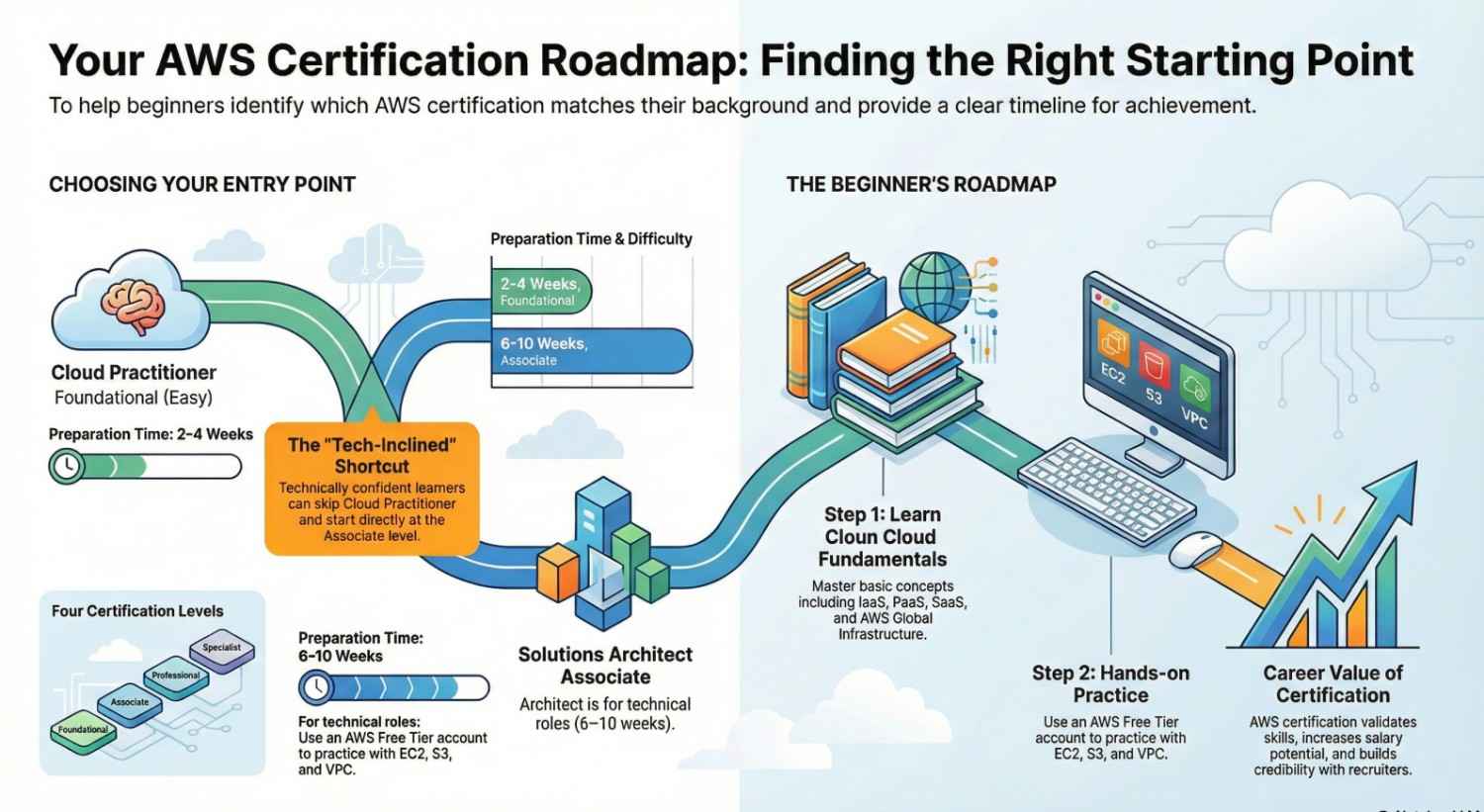
AWS certifications are divided into four levels:
1️⃣ Foundational Level
- AWS Certified Cloud Practitioner
2️⃣ Associate Level
- AWS Certified Solutions Architect – Associate
- AWS Certified Developer – Associate
- AWS Certified SysOps Administrator – Associate
3️⃣ Professional Level
- AWS Certified Solutions Architect – Professional
- AWS Certified DevOps Engineer – Professional
4️⃣ Specialty Level
(Security, Machine Learning, Advanced Networking, Data, etc.)
For beginners, the real question is:
Should you start with Cloud Practitioner or jump directly to Associate?
Best AWS Certification for Beginners
Option 1: Start with AWS Certified Cloud Practitioner
Best for:
- Non-technical professionals
- Students
- Project managers
- Sales / finance professionals
- Absolute beginners in IT
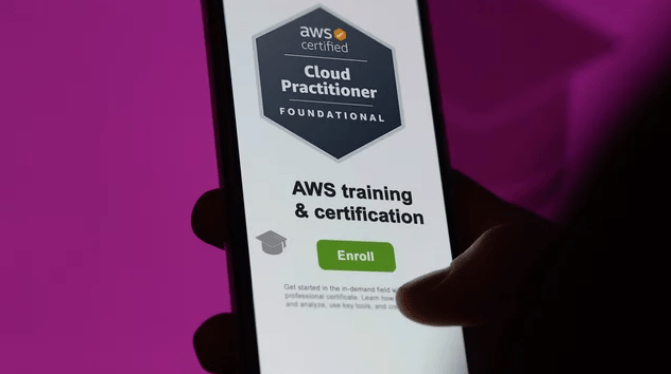
The AWS Certified Cloud Practitioner is the entry-level AWS certification.
What You Learn:
- Basic cloud computing concepts
- AWS global infrastructure
- Core AWS services (EC2, S3, RDS, Lambda)
- Billing and pricing models
- Security fundamentals
Preparation Time:
2–4 weeks (if consistent)
Difficulty Level:
⭐ Easy
Should You Start Here?
✔ Yes — if you’re completely new to cloud or IT
❌ No — if you already have IT or networking experience
Option 2: Start Directly with Solutions Architect Associate
If you already have:
- Basic IT knowledge
- Networking fundamentals
- Some hands-on experience
- Or strong self-learning ability
You can skip Cloud Practitioner and start with:
AWS Certified Solutions Architect – Associate
This is the most popular AWS certification worldwide.
What You Learn:
- Designing scalable AWS architectures
- High availability & fault tolerance
- Security best practices
- Cost optimization
- Real-world cloud architecture scenarios
Preparation Time:
6–10 weeks
Difficulty Level:
⭐⭐⭐ Moderate
Career Value:
Very high
For most technical beginners, this is the best AWS certification to start with.
Decision Framework: Which AWS Certification Should You Start With?
Use this quick guide:
| Your Background | Start With |
|---|---|
| No IT background | Cloud Practitioner |
| IT student | Solutions Architect Associate |
| Developer | Developer Associate |
| System Admin | SysOps Associate |
| Career switcher (non-tech) | Cloud Practitioner → Solutions Architect |
| Already in cloud | Skip to Associate |
AWS Certification Roadmap for Beginners
Here’s a practical roadmap:
Step 1: Learn Cloud Basics (2–3 Weeks)
- What is cloud computing?
- IaaS vs PaaS vs SaaS
- Regions & Availability Zones
Step 2: Create AWS Free Tier Account
Practice with:
- EC2
- S3
- IAM
- VPC
Hands-on experience is critical for passing AWS certification exams.
Step 3: Choose Your First Exam
Most beginners follow:
Cloud Practitioner → Solutions Architect Associate → Professional → Specialty
OR
Solutions Architect Associate → Professional → Specialty
Should You Skip Cloud Practitioner?
Many people ask:
“Can I skip AWS Cloud Practitioner?”
The answer: Yes if you are technically inclined.
The AWS Certified Cloud Practitioner is great for fundamentals, but it does not deeply test architecture skills.
If your goal is:
- Cloud Engineer
- Solutions Architect
- DevOps Engineer
- AWS Developer
Then starting with Associate level saves time.
How Long Does It Take to Get AWS Certified?
| Certification | Avg Study Time |
|---|---|
| Cloud Practitioner | 2–4 weeks |
| Solutions Architect Associate | 6–10 weeks |
| Professional | 3–6 months |
Consistency matters more than speed.
Career Impact of Starting with the Right AWS Certification
Choosing the right starting point can:
- Reduce preparation time
- Save exam fees
- Improve confidence
- Accelerate job readiness
- Help you build structured cloud knowledge
The most in-demand AWS certification for beginners in technical roles remains:
AWS Certified Solutions Architect – Associate
Final Recommendation (Beginner Roadmap Summary)
If you’re completely new →
Start with AWS Certified Cloud Practitioner
If you have technical background →
Start with AWS Certified Solutions Architect – Associate
If you’re a developer →
Consider AWS Certified Developer – Associate
If you’re a system administrator →
Consider AWS Certified SysOps Administrator – Associate
Conclusion
So, which AWS certification should you start with?
There’s no one-size-fits-all answer.
But for most beginners aiming for a cloud career:
✅ Solutions Architect Associate is the best starting point
✅ Cloud Practitioner is ideal for non-technical beginners
Start small, stay consistent, practice hands-on, and follow a roadmap.
Your AWS certification journey can open doors to high-paying cloud careers if you start the right way.
Searching for the best AWS Cloud Practitioner training course? Click here to get started today.