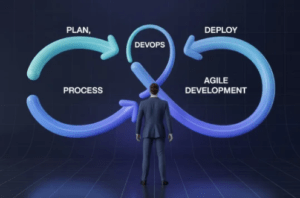
The DevOps landscape has evolved fast. What started as a culture shift between development and operations has now branched into specialized DevOps roles most notably DevOps Engineer, Site Reliability Engineer (SRE), and Platform Engineer.
If you’re confused about which DevOps role fits you best, you’re not alone. Job descriptions overlap, titles vary across companies, and expectations change depending on scale and maturity. This guide breaks it all down so you can confidently choose the right DevOps career path based on skills, mindset, and long-term goals.
Why DevOps Roles Are Splitting
As organizations grow, a single “DevOps Engineer” can no longer handle everything:
- CI/CD pipelines
- Cloud infrastructure
- Monitoring and observability
- Reliability and incident response
- Internal tooling and developer experience
This led to clearer specialization:
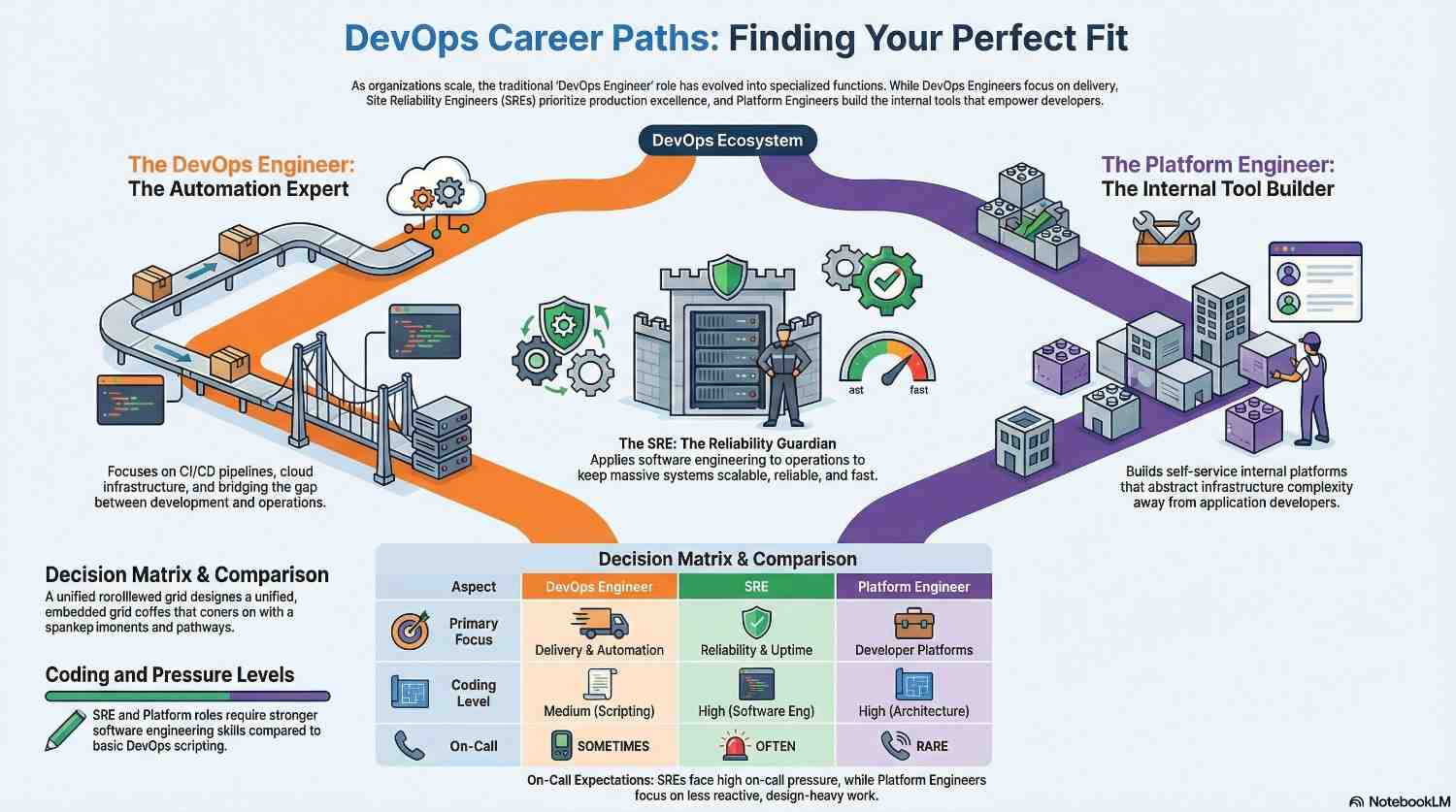
- DevOps Engineer → Delivery & automation
- SRE → Reliability & production excellence
- Platform Engineer → Internal platforms & developer productivity
Understanding this split is critical for career growth, interview preparation, and salary negotiation.
Role 1: DevOps Engineer
What Does a DevOps Engineer Do?
A DevOps Engineer focuses on automation, CI/CD pipelines, cloud infrastructure, and deployment workflows. This role acts as the bridge between developers and operations.
Core responsibilities
- Build and maintain CI/CD pipelines (Jenkins, GitHub Actions, GitLab CI)
- Manage cloud infrastructure (AWS, Azure, GCP)
- Implement Infrastructure as Code (Terraform, CloudFormation)
- Containerization using Docker and Kubernetes
- Improve deployment speed and reliability
- Support developers with build and release processes
Key DevOps Engineer Skills
Technical skills
- Git, branching strategies, GitOps
- Linux & shell scripting
- Docker & Kubernetes basics
- Terraform / IaC
- CI/CD tools
- Cloud services (EC2, IAM, VPC, Load Balancers)
Soft skills
- Cross-team collaboration
- Problem-solving mindset
- Automation-first thinking
Who Should Become a DevOps Engineer?
This role is ideal if you:
- Enjoy automation and tooling
- Like working across multiple teams
- Want broad exposure to cloud, CI/CD, and containers
- Are transitioning from sysadmin or developer roles
Pros and Cons
Pros
- High demand
- Broad skillset
- Easier entry into DevOps careers
Cons
- Can become a “catch-all” role
- On-call without clear ownership
- Less specialization at senior levels
Role 2: Site Reliability Engineer (SRE)
What Is an SRE?
Site Reliability Engineering (SRE) was pioneered by Google and focuses on applying software engineering principles to operations and reliability.
An SRE’s mission:
Keep systems reliable, scalable, and fast at production scale
Core SRE Responsibilities
- Define and monitor SLIs, SLOs, and SLAs
- Reduce toil through automation
- Handle incident response and postmortems
- Improve system reliability and performance
- Capacity planning and load testing
- Production monitoring and observability
Key SRE Skills
Technical skills
- Strong programming (Python, Go, Java)
- Distributed systems knowledge
- Linux internals & networking
- Monitoring tools (Prometheus, Grafana, Datadog)
- Kubernetes at scale
- Chaos engineering
Mindset
- Reliability over features
- Data-driven decision making
- Blameless postmortems
Who Should Become an SRE?
SRE is a great fit if you:
- Love debugging production issues
- Enjoy performance tuning and system design
- Prefer engineering over configuration
- Are comfortable being on-call
- Think in terms of error budgets and risk
Pros and Cons
Pros
- Strong engineering reputation
- High salaries
- Clear ownership of reliability
Cons
- High pressure
- On-call responsibilities
- Steeper learning curve
Role 3: Platform Engineer
What Is Platform Engineering?
Platform Engineers build internal developer platforms that abstract infrastructure complexity away from application teams.
Think of them as builders of:
- Self-service deployment platforms
- Internal PaaS solutions
- Developer tooling and golden paths
Core Platform Engineer Responsibilities
- Design internal platforms on Kubernetes or cloud
- Build reusable infrastructure modules
- Improve developer experience (DevEx)
- Maintain service templates and scaffolding
- Enforce standards and security by default
- Enable teams to ship faster without friction
Key Platform Engineer Skills
Technical skills
- Kubernetes (deep expertise)
- Terraform & IaC modules
- API design
- Cloud-native architecture
- Internal tooling (Backstage, Argo CD)
- Security and compliance automation
Design mindset
- Product thinking
- User (developer) empathy
- Long-term maintainability
Who Should Become a Platform Engineer?
You’ll love this role if you:
- Enjoy building systems others use
- Like abstraction and design
- Want less firefighting, more engineering
- Think about scalability and reuse
- Prefer enablement over operations
Pros and Cons
Pros
- High impact across org
- Less reactive work
- Strong alignment with future DevOps trends
Cons
- Requires org maturity
- Success can be invisible
- Complex stakeholder management
DevOps Engineer vs SRE vs Platform Engineer
| Aspect | DevOps Engineer | SRE | Platform Engineer |
|---|---|---|---|
| Focus | Delivery & automation | Reliability & uptime | Developer platforms |
| Coding | Medium | High | High |
| On-call | Sometimes | Often | Rare |
| Scale | Small to mid | Large systems | Growing orgs |
| Mindset | Enable delivery | Reduce risk | Improve DevEx |
Which DevOps Role Fits You? Ask Yourself These Questions
1. Do you prefer stability or speed?
- Speed & automation → DevOps Engineer
- Stability & reliability → SRE
- Sustainable scale → Platform Engineer
2. Do you enjoy firefighting?
- Yes → SRE
- Sometimes → DevOps Engineer
- No → Platform Engineer
3. Do you like building tools?
- Some → DevOps Engineer
- Production tools → SRE
- Internal platforms → Platform Engineer
4. What’s your coding comfort level?
- Basic scripting → DevOps Engineer
- Strong software engineering → SRE / Platform
Career Path and Salary Growth
A common progression:
- DevOps Engineer → Senior DevOps → Platform Engineer
- DevOps Engineer → SRE → Senior SRE
- Software Engineer → SRE or Platform Engineer
Market trend:
Platform Engineering and SRE roles are growing fastest in cloud-native and enterprise environments.
Final Verdict: There’s No “Best” Role Only the Right Fit
Choosing between DevOps Engineer, SRE, and Platform Engineer isn’t about prestige it’s about alignment.
- Choose DevOps Engineer if you want breadth and fast entry
- Choose SRE if reliability and engineering excite you
- Choose Platform Engineer if you love building systems that empower others
The best DevOps professionals evolve over time. Your role today doesn’t lock you in it prepares you for what’s next.
Want to go deeper into DevOps? Explore Jeevi’s Page for detailed resources.
This tutorial is only the first step learn DevOps hands-on with our complete course and take your skills to the next level.