The world of UI/UX design is evolving faster than ever. With rapid advancements in technology, user expectations are higher, attention spans are shorter, and competition is fierce. In 2026, businesses that prioritize user experience (UX) and user interface (UI) design will not only stand out but dominate their industries.
This in-depth guide explores the top UI/UX design trends in 2026, helping designers, developers, and businesses stay ahead of the curve while optimizing for SEO, engagement, and conversions.
Why UI/UX Design Trends Matter in 2026
User experience is no longer just about aesthetics it’s about functionality, accessibility, and emotional connection.
Key reasons to follow UI/UX trends:
- Improve user engagement and retention
- Boost conversion rates
- Enhance brand perception
- Support SEO performance (Core Web Vitals, mobile usability)
Search engines increasingly prioritize user-centric design, making UX a critical ranking factor.
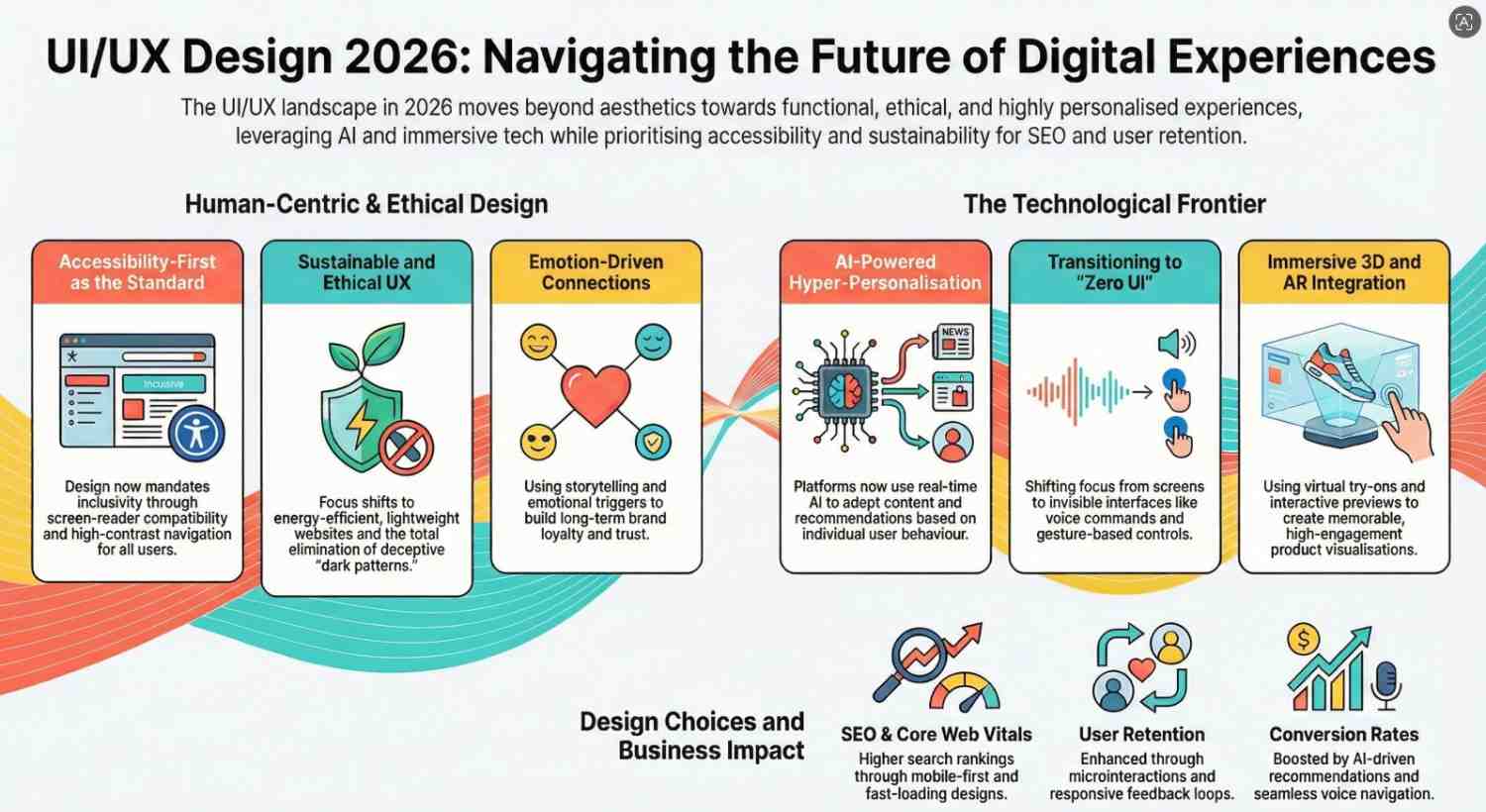
1. AI-Powered Personalization
Artificial Intelligence is transforming how users interact with digital platforms.
What’s changing:
- Websites adapt content based on user behavior
- Personalized recommendations improve engagement
- Chatbots deliver human-like interactions
Why it matters:
AI-driven UX creates tailored experiences that increase satisfaction and conversions.
Example:
E-commerce platforms showing product suggestions based on browsing history.
2. Voice User Interface (VUI)
Voice search and commands are becoming mainstream.
Key features:
- Hands-free navigation
- Faster search interactions
- Accessibility improvements
UX impact:
Designers must now consider voice flows, not just visual layouts.
SEO tip:
Optimize for conversational keywords like:
- “best UI design tools near me”
- “how to improve user experience”
3. Minimalism with Purpose
Minimalist design continues to dominate but with a strategic twist.
Characteristics:
- Clean layouts
- Generous white space
- Focused content
Why it works:
- Reduces cognitive load
- Improves readability
- Speeds up website performance
Minimalism in 2026 is not about removing elements it’s about keeping what truly matters.
4. Dark Mode Evolution
Dark mode is no longer optional it’s expected.
Benefits:
- Reduces eye strain
- Saves battery on devices
- Enhances visual appeal
Trend shift:
Designers are now creating dual-experience interfaces optimized for both light and dark themes.
5. Microinteractions for Engagement
Microinteractions are small animations that guide users.
Examples:
- Button hover effects
- Loading animations
- Swipe feedback
Why they matter:
They make interfaces feel intuitive, responsive, and alive.
Microinteractions improve usability while subtly influencing user behavior.
6. Immersive 3D and Interactive Elements
With better hardware and faster internet, 3D design is becoming mainstream.
Use cases:
- Product visualization
- Interactive storytelling
- Gamified experiences
Impact:
3D elements create memorable experiences that boost engagement.
7. Accessibility-First Design
Accessibility is now a necessity, not an option.
Focus areas:
- Screen reader compatibility
- Color contrast
- Keyboard navigation
Why it matters:
Inclusive design ensures usability for all users, including those with disabilities.
SEO advantage:
Accessible websites often perform better in search rankings.
8. Mobile-First and Thumb-Friendly Design
Mobile usage continues to dominate in 2026.
Key practices:
- Responsive design
- Large tap targets
- Easy navigation
UX shift:
Designing for mobile first, then scaling up to desktop.
9. Advanced Motion Design
Motion design is evolving beyond simple animations.
Trends:
- Scroll-triggered animations
- Parallax effects
- Storytelling through motion
Benefits:
- Enhances user engagement
- Guides attention
- Improves navigation flow
10. Data-Driven UX Design
UX decisions are increasingly based on data.
Tools and methods:
- Heatmaps
- A/B testing
- User analytics
Outcome:
Designers can create experiences based on real user behavior rather than assumptions.
11. Neumorphism and Glassmorphism 2.0
Modern UI styles are evolving with better usability.
Features:
- Soft shadows (Neumorphism)
- Frosted glass effects (Glassmorphism)
2026 update:
Designers are balancing aesthetics with accessibility and performance.
12. Emotion-Driven Design
Design is becoming more human-centric.
Focus:
- Emotional triggers
- Storytelling
- Brand personality
Goal:
Create deeper connections with users.
13. Augmented Reality (AR) Integration
AR is transforming digital experiences.
Applications:
- Virtual try-ons
- Interactive product previews
- Real-world overlays
Industries:
E-commerce, real estate, education
14. Zero UI (Invisible Interfaces)
The future of UI may not involve screens at all.
Examples:
- Voice assistants
- Gesture-based controls
- Smart environments
Impact:
Focus shifts from interface to experience.
15. Sustainable and Ethical Design
Sustainability is influencing digital design.
Practices:
- Lightweight websites
- Energy-efficient design
- Ethical UX (no dark patterns)
Why it matters:
Users are becoming more conscious of digital ethics and environmental impact.
How These Trends Impact SEO
UI/UX design and SEO are now deeply interconnected.
Key connections:
- Page speed affects rankings
- Mobile UX impacts indexing
- Engagement signals influence SEO
Core Web Vitals:
- Loading performance
- Interactivity
- Visual stability
Optimizing UX directly improves search visibility.
How to Implement These Trends
You don’t need to adopt everything at once.
Step-by-step approach:
- Audit your current UX
- Identify pain points
- Prioritize high-impact changes
- Test and iterate
- Monitor performance
Common UI/UX Mistakes to Avoid
- Overloading users with too many features
- Ignoring mobile experience
- Poor navigation structure
- Slow loading speeds
- Lack of accessibility
Avoiding these mistakes is just as important as following trends.
Future of UI/UX Beyond 2026
The future will be shaped by:
- AI and automation
- Extended reality (XR)
- Hyper-personalization
- Human-centered design
Designers must stay adaptable and continuously learn.
Final Thoughts
UI/UX design in 2026 is all about creating meaningful, efficient, and engaging user experiences. From AI-driven personalization to accessibility-first design, these trends highlight a shift toward more human-centered and data-driven approaches.
By adopting these trends strategically, businesses can:
- Improve user satisfaction
- Increase conversions
- Strengthen SEO performance
- Build long-term brand loyalty
Quick Summary of UI/UX Trends in 2026
- AI-powered personalization
- Voice user interfaces
- Purposeful minimalism
- Dark mode optimization
- Microinteractions
- 3D and immersive design
- Accessibility-first approach
- Mobile-first design
- Advanced motion design
- Data-driven UX
- Modern UI styles (Neumorphism & Glassmorphism)
- Emotion-driven design
- AR integration
- Zero UI
- Sustainable design
Staying updated with UI/UX trends is not just about design it’s about delivering better experiences that users love and trust.
- Want to learn UI/UX design? Click here to get started.