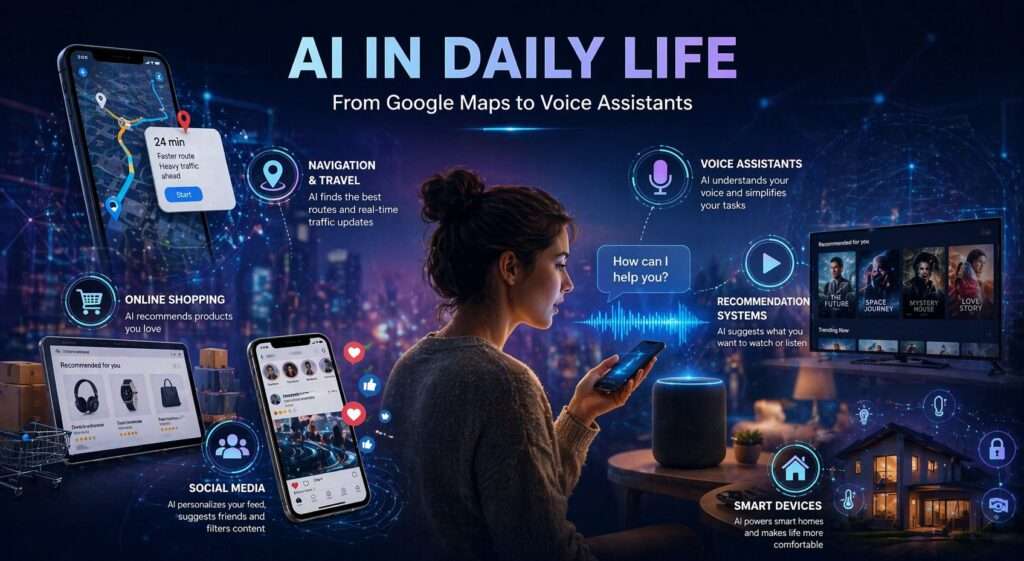
From navigation apps to smart assistants, Artificial Intelligence has become a natural part of our everyday lives. It works silently in the background, making our tasks faster, easier, and more efficient.
Introduction
Artificial Intelligence is no longer limited to advanced research or large technology companies. Today, it is deeply integrated into our daily routines. From the moment we wake up to the time we go to sleep, AI influences many of the decisions we make.
Whether it is navigating through traffic, watching recommended videos, or using voice assistants, AI is constantly working behind the scenes to improve convenience and efficiency.
Navigation and Travel
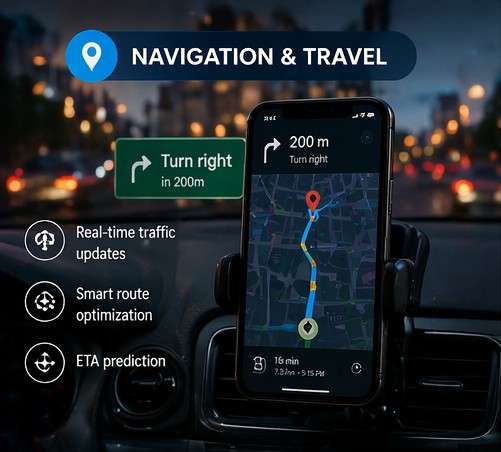
Applications like Google Maps use AI to provide real-time navigation and traffic updates. These systems analyze data from multiple users to suggest the fastest routes and avoid congestion.
AI can also predict travel time and recommend alternative paths, helping users save time and fuel. This makes daily commuting more efficient and stress-free.
AI systems process live data from thousands of users, satellites, and sensors to update routes in real time. Over time, they learn traffic patterns and can predict congestion before it happens, improving both accuracy and efficiency.
Voice Assistants
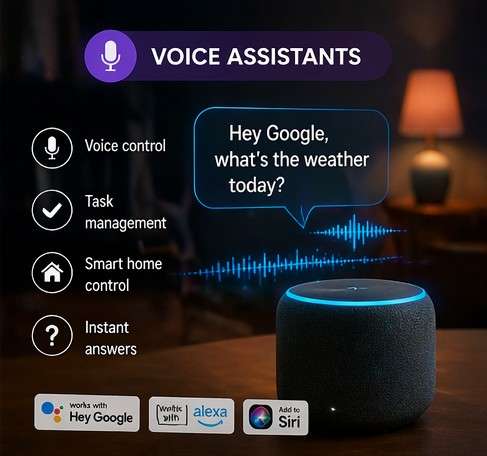
AI-powered assistants such as Google Assistant, Siri, and Alexa allow users to interact with technology using voice commands.
They can perform tasks like setting reminders, answering questions, controlling smart devices, and even sending messages. These assistants learn from user behavior and become more accurate over time.
These assistants use natural language processing (NLP) to understand human speech and respond intelligently. As they interact more with users, they adapt to preferences, accents, and usage patterns, making interactions smoother.
Recommendation Systems
Platforms like Netflix and YouTube use AI to recommend content based on user preferences.
AI analyzes what users watch, search, and like to suggest movies, shows, or videos. This creates a personalized experience and keeps users engaged with relevant content.
Behind the scenes, AI models analyze watch history, clicks, and time spent on content to refine suggestions. This continuous learning helps platforms keep content relevant and engaging for each user.

Online Shopping
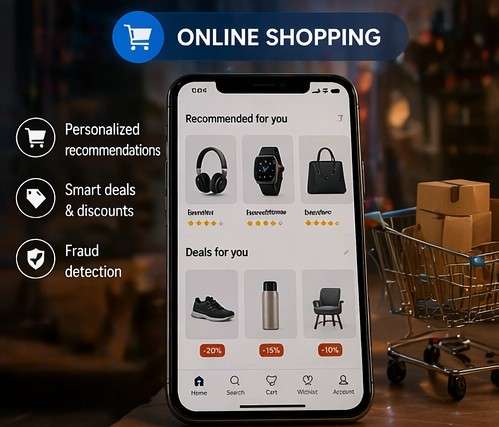
E-commerce platforms like Amazon use AI to improve the shopping experience.
AI helps by recommending products based on previous searches, displaying personalized ads, and predicting customer preferences. This makes shopping faster and more convenient for users.
AI also helps businesses manage inventory, forecast demand, and detect fraudulent transactions. This not only improves user experience but also increases efficiency for companies.
Social Media
Social media platforms such as Instagram and Facebook use AI to enhance user experience.
AI is used to show relevant posts, suggest friends, detect spam, and filter harmful content. This helps keep platforms engaging and safe for users.
AI algorithms rank content based on relevance and engagement, ensuring users see posts they are more likely to interact with. It also plays a key role in moderating harmful or inappropriate content.

Smart Devices
AI is also used in smart devices such as TVs, speakers, and home automation systems. These devices can learn user preferences and automate tasks like adjusting temperature, playing music, or controlling lights.
This makes homes more comfortable and efficient, creating a smarter living environment.
These devices use AI to automate daily routines, such as adjusting lighting or temperature based on user habits. Over time, they become more personalized and efficient in responding to user needs.

Conclusion
Artificial Intelligence has become an essential part of our daily lives. It helps simplify tasks, save time, and improve overall efficiency.
As AI continues to evolve, its presence in everyday life will only increase, making technology more intelligent and user-friendly. AI is not just making life easier—it is changing how we interact with technology on a daily basis. As these systems become more advanced, their role in everyday life will continue to grow.
AI is not the future anymore—it is already a part of our present, shaping how we live every day.