The tech industry has gone through massive shifts in the last decade, but one role has consistently stayed in high demand DevOps. If you’re currently working in IT and wondering whether switching to DevOps is worth it, one of the biggest motivators is simple: salary growth.
This guide breaks down how much of a salary jump you can expect, which roles transition best into DevOps, and how to make the switch strategically.
What Is DevOps and Why It Pays More
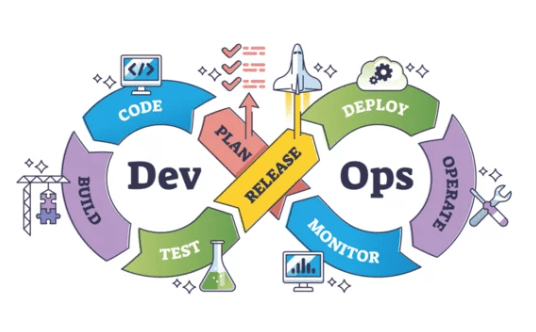
DevOps is not just a role it’s a culture that combines development (Dev) and operations (Ops) to improve software delivery speed and reliability.
Companies pay DevOps engineers more because they:
- Handle both infrastructure and application workflows
- Improve deployment speed (CI/CD pipelines)
- Reduce downtime and operational costs
- Work with critical cloud infrastructure
In short: DevOps engineers directly impact business efficiency, and that makes them valuable.
Average DevOps Salaries (2026 Snapshot)
Global Perspective
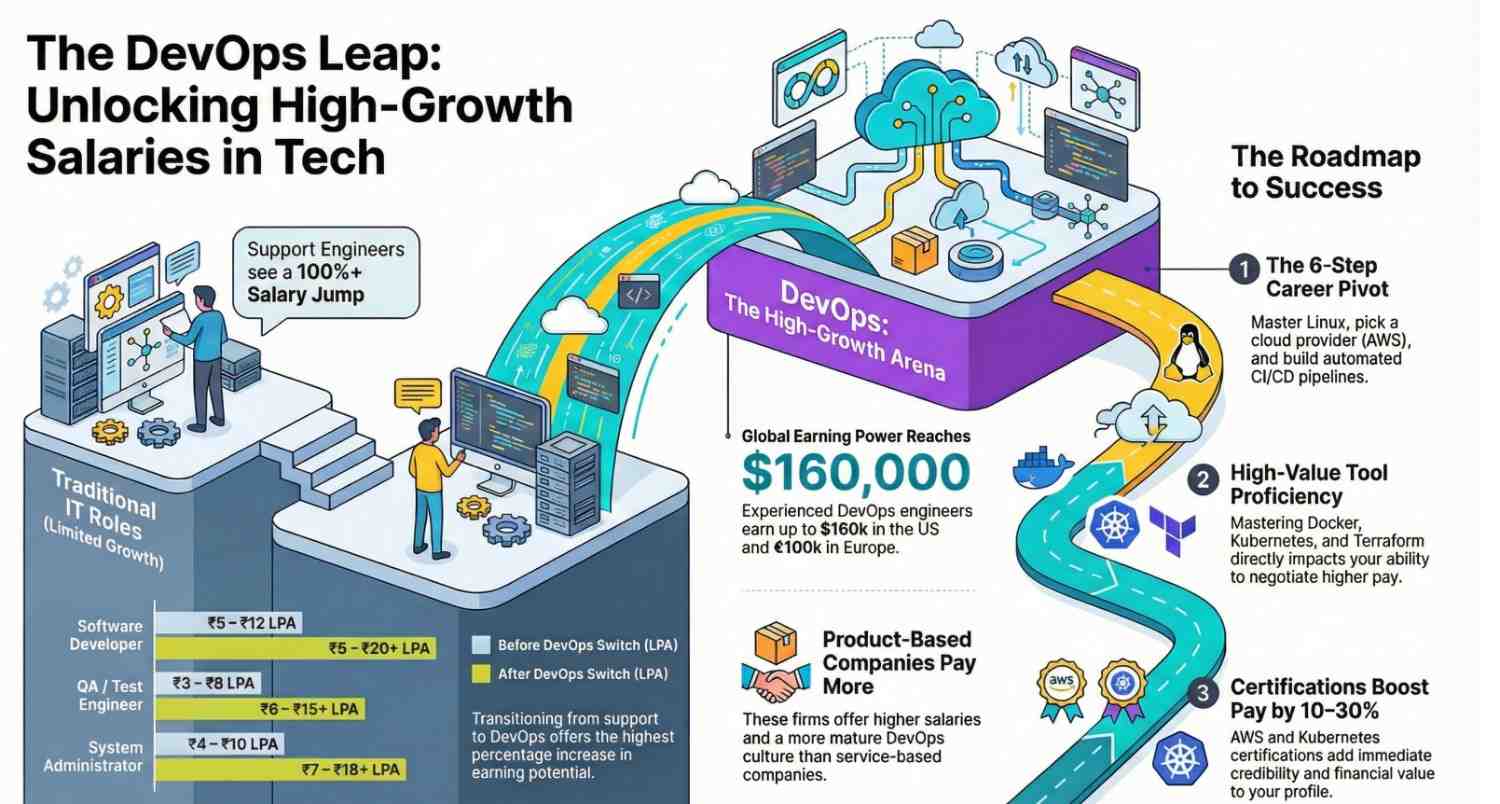
- United States: $110,000 – $160,000/year
- Europe: €60,000 – €100,000/year
- India: ₹6 LPA – ₹25+ LPA
🇮🇳 In India (by experience)
- Entry-level: ₹4 – ₹8 LPA
- Mid-level: ₹8 – ₹18 LPA
- Senior: ₹18 – ₹35+ LPA
Compared to many traditional IT roles, DevOps salaries scale faster especially after 2–3 years of experience.
Salary Jump: Before vs After Switching to DevOps
Here’s a realistic comparison of common IT roles and how salaries change after moving into DevOps:
1. Software Developer → DevOps Engineer
- Before: ₹5 – ₹12 LPA
- After: ₹8 – ₹20+ LPA
- Increase: 30% to 70%
Why the jump?
Developers already understand code. Adding deployment, automation, and cloud skills makes them highly valuable.
2. QA / Test Engineer → DevOps
- Before: ₹3 – ₹8 LPA
- After: ₹6 – ₹15+ LPA
- Increase: 50% to 100%
Why the jump?
Automation testing + CI/CD pipelines = perfect DevOps foundation.
3. System Administrator → DevOps
- Before: ₹4 – ₹10 LPA
- After: ₹7 – ₹18+ LPA
- Increase: 40% to 80%
Why the jump?
Sysadmins already manage servers learning cloud and automation bridges the gap.
4. Cloud Engineer → DevOps
- Before: ₹6 – ₹15 LPA
- After: ₹10 – ₹25+ LPA
- Increase: 30% to 60%
Why the jump?
Cloud + DevOps = one of the highest-paying combinations in tech.
5. Support Engineer → DevOps
- Before: ₹2.5 – ₹6 LPA
- After: ₹6 – ₹14+ LPA
- Increase: 100%+
Why the jump?
Support roles gain massive value when combined with automation and scripting.
Why DevOps Salaries Grow Faster
1. High Demand, Low Supply
Companies struggle to find engineers who understand:
- Cloud platforms
- Automation tools
- Infrastructure as Code
2. Business-Critical Role
DevOps engineers:
- Reduce downtime
- Speed up releases
- Save infrastructure costs
3. Multi-Skill Advantage
A DevOps engineer combines:
- Development
- Operations
- Security (DevSecOps)
That’s 3 roles in one.
Skills That Directly Impact Your Salary
If you want a bigger salary jump, focus on these high-paying skills:
Must-Have Tools
Cloud Platforms
Programming & Scripting
- Python
- Bash
- Go (optional but high value)
Certifications That Boost DevOps Salary
Certifications can increase your salary by 10–30%, especially in India.
Top ones include:
- AWS Certified DevOps Engineer
- Certified Kubernetes Administrator (CKA)
- Azure DevOps Engineer Expert
They signal credibility especially if you’re switching roles.
Company Type Matters (A Lot)
Service-Based Companies
- Lower salary growth
- Structured roles
- Less DevOps maturity
Product-Based Companies
- Higher salaries
- Real DevOps culture
- Faster growth
Startups
- Risky but high-paying
- More hands-on experience
- Faster career progression
Remote DevOps Jobs: A Game Changer
Remote work has changed salary dynamics.
From India, you can:
- Work for US/Europe companies
- Earn ₹20 – ₹60+ LPA
- Get paid in dollars
But competition is global skills matter more than ever.
Challenges You Should Know Before Switching
Let’s keep it real DevOps isn’t easy.
Steep Learning Curve
You need to learn:
- Cloud
- Networking
- Linux
- Automation
On-Call Responsibilities
Some roles require:
- Night shifts
- Incident handling
Tool Overload
There are too many tools choosing the right ones is key.
Step-by-Step Roadmap to Switch to DevOps
Step 1: Learn Linux & Networking
Foundation is everything.
Step 2: Master One Cloud Platform
Start with AWS.
Step 3: Learn CI/CD Pipelines
Understand automation workflows.
Step 4: Work on Projects
Example:
- Deploy a web app using Docker + Kubernetes
- Build CI/CD pipeline using Jenkins
Step 5: Get Certified
Adds credibility.
Step 6: Apply Smartly
Target:
- Startups
- Mid-size product companies
Realistic Timeline to Switch
- Beginner: 6–9 months
- With IT experience: 3–6 months
Consistency matters more than speed.
Is DevOps Worth It Financially?
Short answer: Yes.
Switching to DevOps can:
- Double your salary in 1–2 years
- Open global opportunities
- Future-proof your career
But only if you:
- Build real skills
- Stay updated
- Practice consistently
Final Thoughts
DevOps is not just a trend it’s a long-term career path with strong salary growth. Whether you’re a developer, tester, or system admin, the transition is achievable and rewarding.
The biggest takeaway?
Your salary in DevOps depends more on your skills than your previous role.
If you invest time in learning the right tools and building real-world projects, the salary jump is not just possible it’s expected.