In today’s world, data is everywhere. Every click, swipe, purchase, and even pause tells a story. Companies don’t just collect this data for fun—they use it like a treasure map to make smarter decisions, improve services, and stay ahead of competitors.
But what exactly is “Big Data,” and how does it help businesses think smarter? Let’s break it down in a simple and relatable way.
What is Big Data?
Big Data refers to extremely large and complex sets of data that cannot be handled by traditional tools. It includes information from social media, customer transactions, sensors, websites, and more.
Think of it like this:
If normal data is a notebook, Big Data is an entire library that keeps growing every second.
Why Big Data Matters for Companies
Companies don’t rely on guesswork anymore. Instead of saying, “I think customers like this,” they now say, “The data shows customers prefer this.”
Big Data helps businesses:
- Understand customer behavior
- Predict future trends
- Improve products and services
- Reduce risks and costs
It turns decisions from intuition into intelligence.
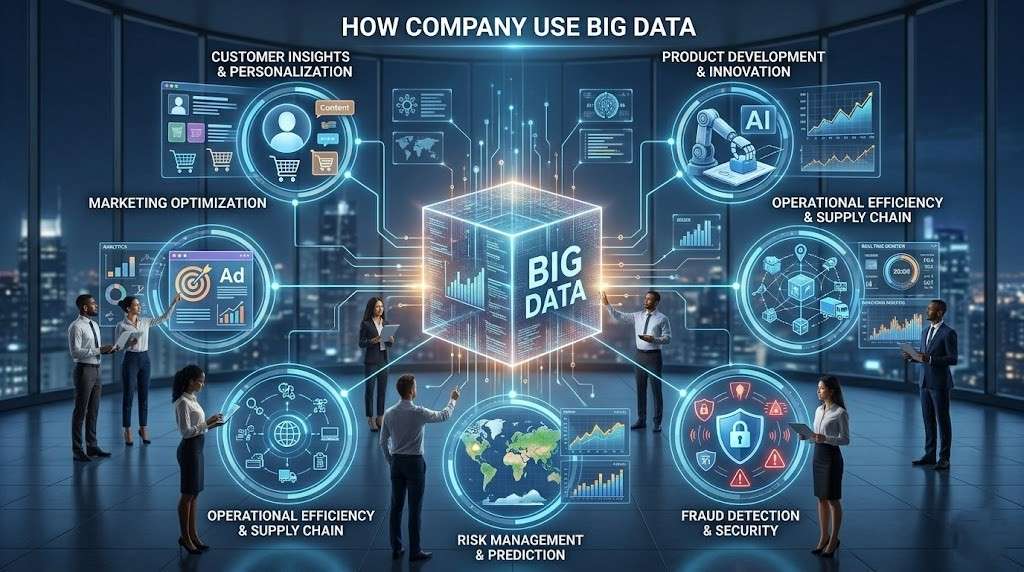
How Companies Use Big Data
1. Understanding Customer Behavior
Every time you shop online or watch a video, your actions are recorded. Companies analyze this data to understand what you like, when you buy, and how you interact.
For example:
When you browse products on an e-commerce site and suddenly see “Recommended for you,” that’s Big Data working behind the scenes.
2. Personalized Experiences
Companies use data to make your experience feel tailored just for you.
- Streaming platforms suggest movies based on your watch history
- Shopping apps recommend products based on your past purchases
It’s like having a personal assistant who knows your taste better than you do.
3. Improving Products and Services
Businesses collect feedback, reviews, and usage data to improve what they offer.
If many users stop using an app at a certain step, companies analyze the data to fix that issue. This leads to better user experience and happier customers.
4. Predicting Future Trends
Big Data allows companies to look into the future—almost like a crystal ball, but powered by logic.
By analyzing patterns, businesses can:
- Predict demand for products
- Plan inventory
- Launch products at the right time
For example, retailers stock more umbrellas when data predicts rainy weather.
5. Making Faster Decisions
In business, speed matters. Big Data tools provide real-time insights, helping companies make quick decisions.
Instead of waiting weeks for reports, companies can now act instantly based on live data.
6. Reducing Risks and Fraud
Banks and financial companies use Big Data to detect unusual activities.
If your card is suddenly used in a different country, the system flags it immediately. That’s Big Data protecting you silently.
Real-Life Example
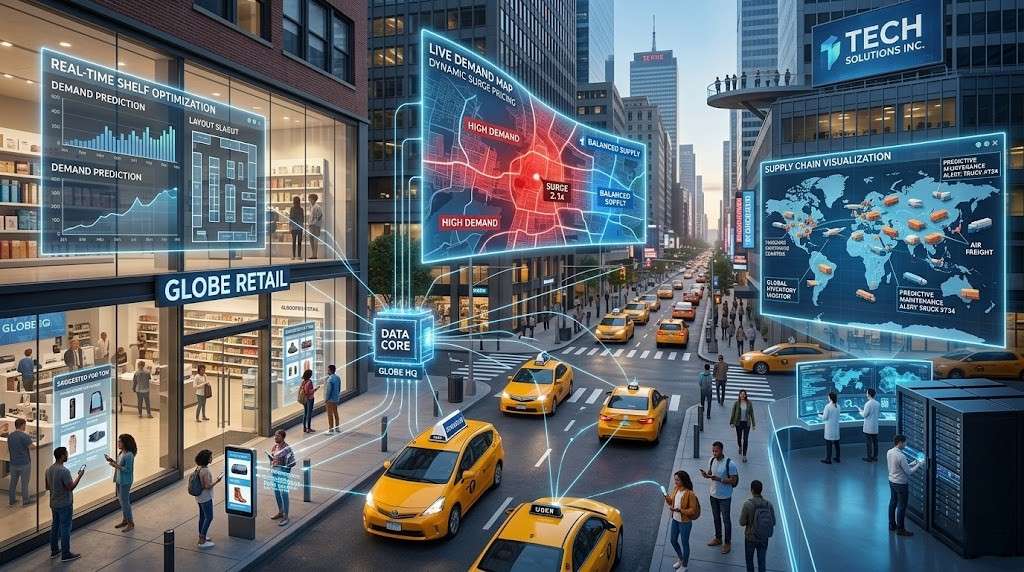
Imagine a food delivery app. It uses Big Data to:
- Recommend restaurants based on your past orders
- Show popular dishes in your area
- Estimate delivery time using traffic data
- Offer discounts at the perfect moment
Everything feels smooth and smart—but behind the scenes, it’s all data-driven.
Challenges of Big Data
Even though Big Data is powerful, it comes with challenges:
- Managing huge volumes of data
- Ensuring data privacy and security
- Finding skilled professionals to analyze data
Companies must handle data responsibly to maintain trust.
The Future of Big Data
Big Data is only getting bigger. With technologies like Artificial Intelligence and Machine Learning, companies can now:
- Automate decisions
- Predict customer needs more accurately
- Create smarter systems
In the future, businesses won’t just react to data—they will anticipate what customers want before they even realize it.
Conclusion
Big Data is like a silent engine powering modern businesses. It transforms raw information into meaningful insights, helping companies make smarter, faster, and better decisions.
In simple terms:
The more a company understands its data, the better it understands its customers.
And in today’s competitive world, understanding customers is everything.